

How do i train my dog to be obedient?
Watching your dog dart across the park ignoring your calls isn’t just frustrating—it can put them at risk near busy streets or public spaces.
When novice dog owners first open a training manual, they are often baffled by seemingly simple commands like "sit," "shake," and "lie down"—basic actions that appear effortless. However, as training progresses, many come to realize that teaching a dog a truly reliable command is far more than just luring with treats and mechanical repetition. Among all canine commands, one is universally recognized by professional trainers as the most challenging to teach. It requires no flashy tricks but demands that dogs overcome their strongest instincts—the "Stay" command.
The difficulty of "Stay" lies first in its direct opposition to a dog’s fundamental behavioral drives. Dogs are inherently dynamic creatures; their ancestors needed constant movement to hunt, patrol territory, and evade danger. Asking an energetic being to remain completely still is like expecting an excitable child to stand motionless in a candy store—it goes against nature. Especially when the owner walks away or distractions arise, maintaining stillness requires immense self-control, a skill not innate to dogs but built through prolonged training that develops inhibitory neural mechanisms. Many dogs easily learn "Sit," but asking them to hold that position for more than five seconds often triggers anxious body language—lip-licking, head-turning, or paw-shifting—all outward signs of inner struggle.
From a cognitive perspective, "Stay" demands multitasking: the dog must remember the initial command, suppress impulses to chase or explore, continuously monitor the owner’s location and cues, and anticipate the release signal. This complex cognitive load is a significant challenge for a canine brain. Neuroscience reveals that dogs exhibit brain activity patterns strikingly similar to humans performing self-control tasks when delaying gratification. A dog successfully holding a long "Stay" demonstrates self-restraint comparable to a human toddler—a rare cognitive feat in the animal kingdom.
The challenge of "Stay" is further magnified by environmental distractions. A dog might remain still for a minute in a quiet living room but struggle to last three seconds in a park with birds or other dogs running by. This context-dependence makes "Stay" a skill requiring extensive generalization across scenarios. In professional service dog training, this single command often demands hundreds of hours of practice in varied environments to achieve reliability—even amid gunfire or explosions.
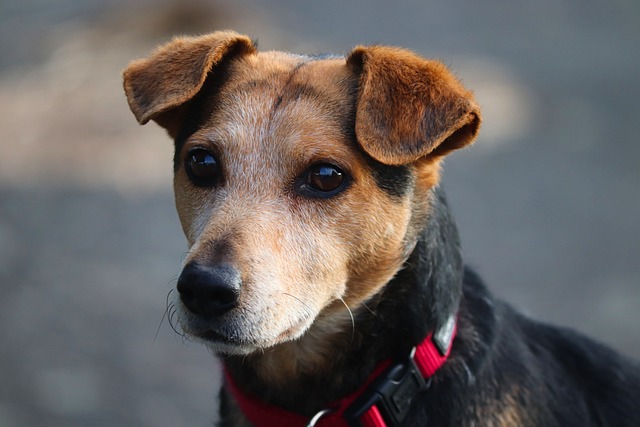
Emotionally, the owner-dog dynamic during "Stay" training is delicate. The command requires suppressing a dog’s natural desire to follow its pack—a source of instinctive anxiety for social animals. As the owner steps back, sensitive dogs experience genuine conflict: obey or follow instinct? This tension is especially visible in clingy dogs, whose eyes often reflect confusion and distress. Skilled trainers emphasize that forcing stillness breeds anxiety; the solution lies in progressive positive reinforcement, linking "Stay" with safety and rewards rather than fear.
Age also plays a key role. Puppies, with underdeveloped prefrontal cortices, struggle to stay still for even five seconds. Adolescent dogs battle hormone-driven curiosity, while seniors may regress due to cognitive decline. This reminds us that "Stay" isn’t a one-time achievement but an ongoing process requiring adjusted expectations throughout a dog’s life.
Breed differences add another layer. Herding dogs, bred for work, often master stillness quickly; scent hounds, wired to scan, perform worse; independent working breeds may need tailored methods. These variations underscore that no universal training approach exists—each dog requires individualized teaching.
Watching a trained search-and-rescue dog hold its position amid chaos or an agility competitor freeze mid-course, we witness not just obedience but a profound interspecies trust and self-control. This ability isn’t innate but forged through patience, understanding, and science. Perhaps that’s why when our dog finally resists charging the doorbell, we feel not just pride but a deeper connection. In a fast-paced world, teaching a dog to truly "Stay" might also remind us to pause and cherish these simple yet profound bonds.
Watching your dog dart across the park ignoring your calls isn’t just frustrating—it can put them at risk near busy streets or public spaces.

New puppy owners often find themselves rushing to clean up accidents before they set in, and that’s where puppy pad training becomes a game-changer.
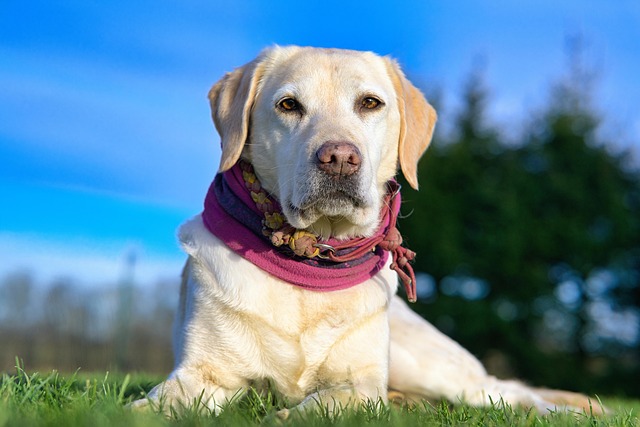
If you've noticed your dog's waistline disappearing and your veterinarian has mentioned those few extra pounds, your first instinct might be to simply reduce the amount of food in their bowl.

Training a dog to use a designated spot indoors isn’t as daunting as many new owners fear, but it does take consistency and an understanding of your pet’s needs.
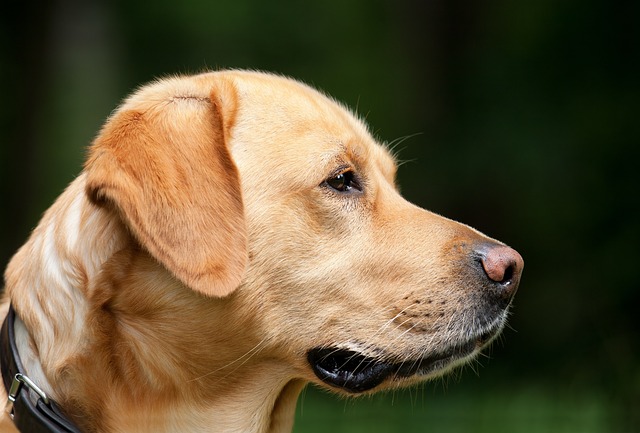
That moment of dread on a walk is all too familiar for many new dog owners. You see another dog approaching down the sidewalk of your neighborhood
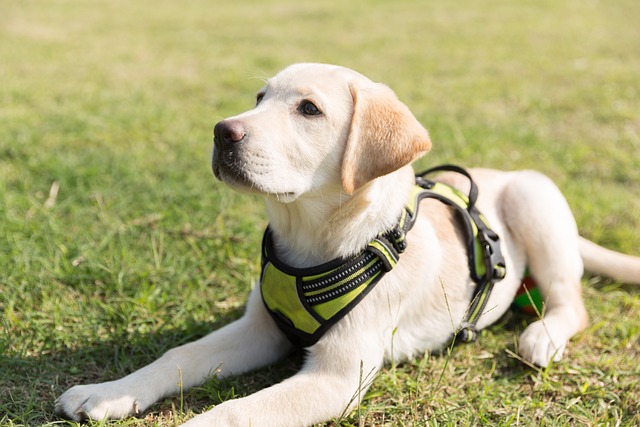
If the sight of another dog on your neighborhood walk makes your heart sink as your own dog erupts into a frenzy of barking and lunging, you're not alone.